Carbon boundary
Whole-life Carbon
kgCO₂e/m²kgCO₂eA1-C4
Embodied, operational and end-of-life impacts are compared over the selected study period.
Product
CASCA supports building and facade option studies across embodied carbon, operational energy, thermal comfort, acoustic comfort, visual comfort, parametric option studies and whole-life carbon review.
Method and performance domains
CASCA combines a building workflow for project-scale carbon assessment with a room workflow for dynamic facade, energy and comfort optioneering.
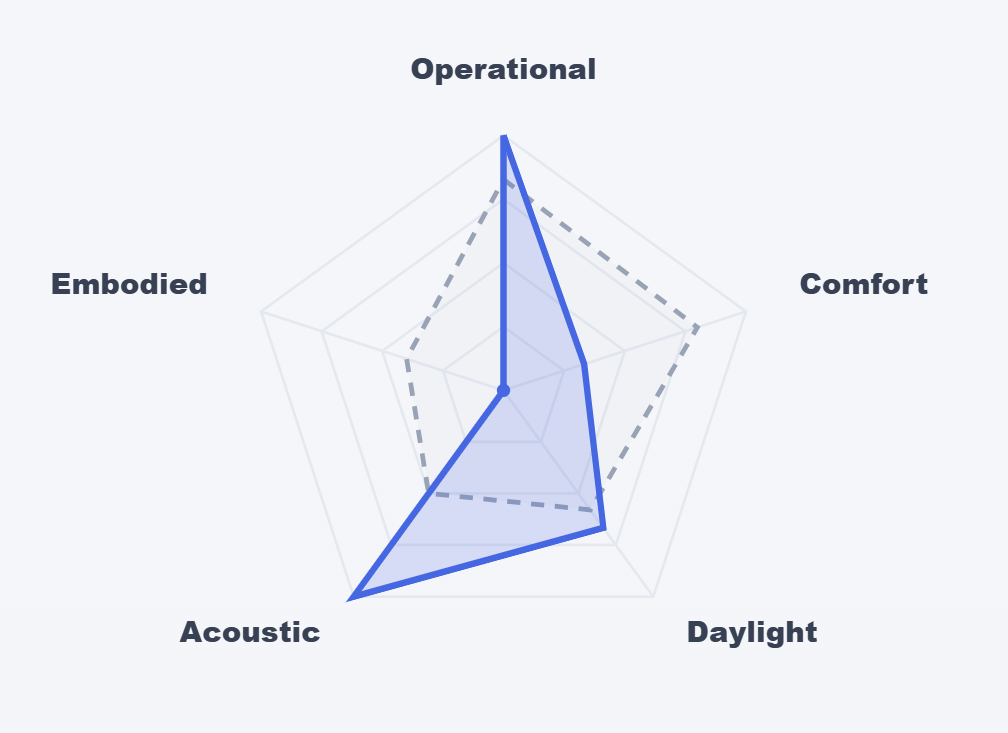
Balanced option: keeps carbon, energy and comfort domains broadly aligned.
Carbon boundary
Embodied, operational and end-of-life impacts are compared over the selected study period.
Dynamic simulation
Hourly weather, gains, ventilation and solar inputs support energy intensity comparison.
Occupied conditions
Room comfort is reviewed to identify overheating and facade-side thermal risk.
Facade attenuation
External noise, facade sound reduction and predicted internal noise are compared.
Radiance daylight
Daylight availability, useful illuminance and direct-sun exposure stay visible.
Facade properties
Whole-product optical and thermal properties are used for facade option comparison.
Parametric analysis
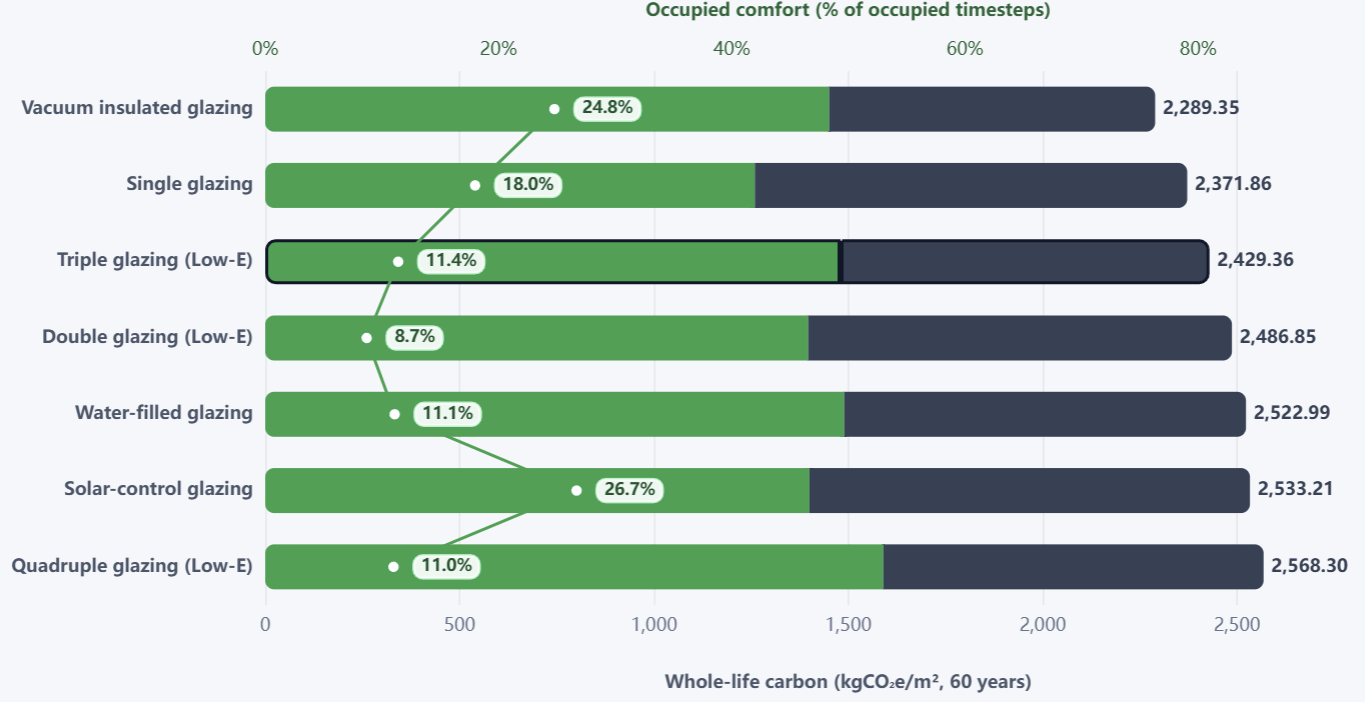
CASCA can compare multiple glazing, facade and design assumptions in a single option study, helping teams see how whole-life carbon and comfort outcomes shift across a broader design space.
Outputs
CASCA outputs are designed for option appraisal, benchmark discussion, research studies and teaching exercises.
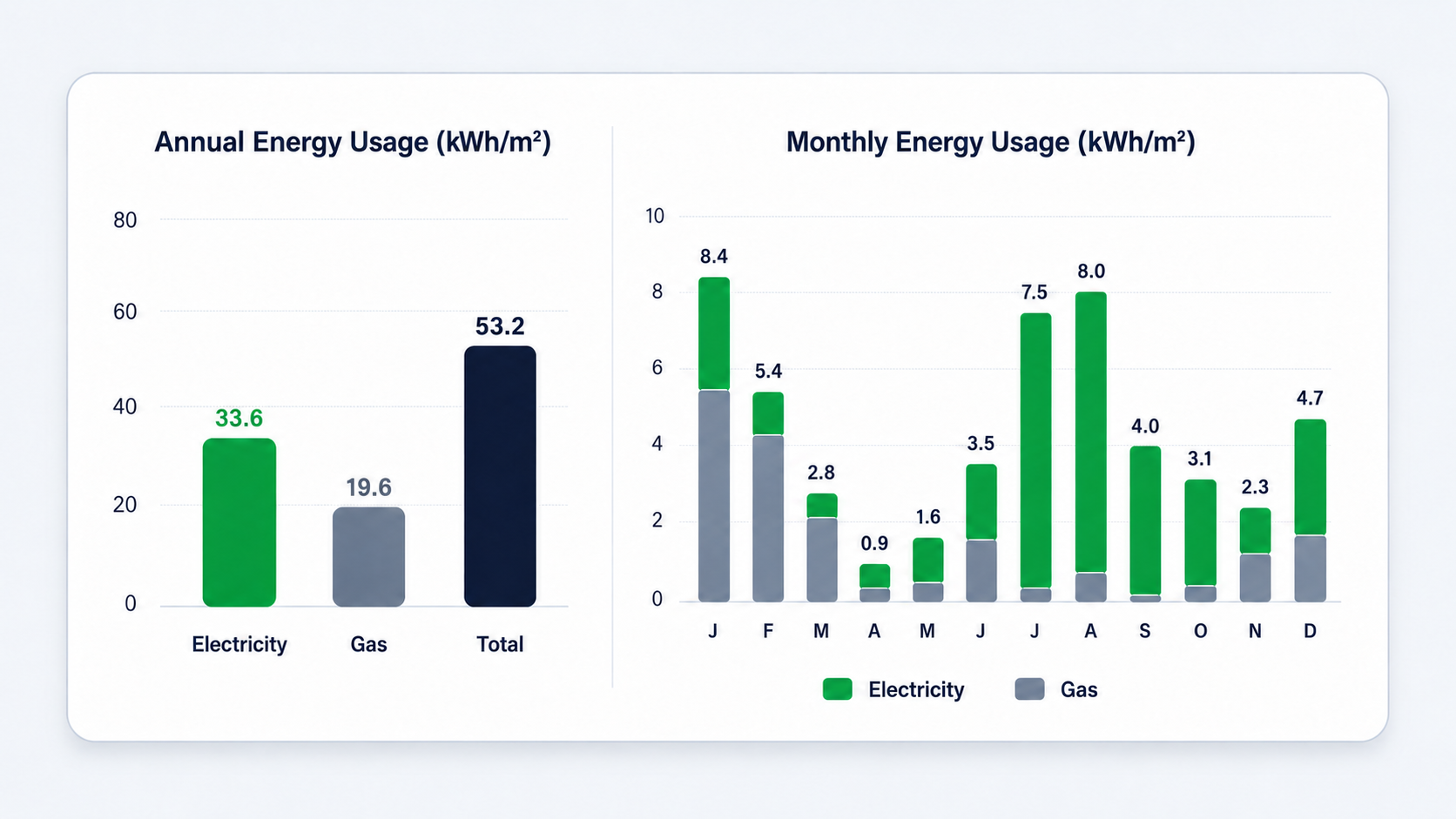
Annual and monthly energy outputs for heating, cooling, electricity and fuel use where relevant.
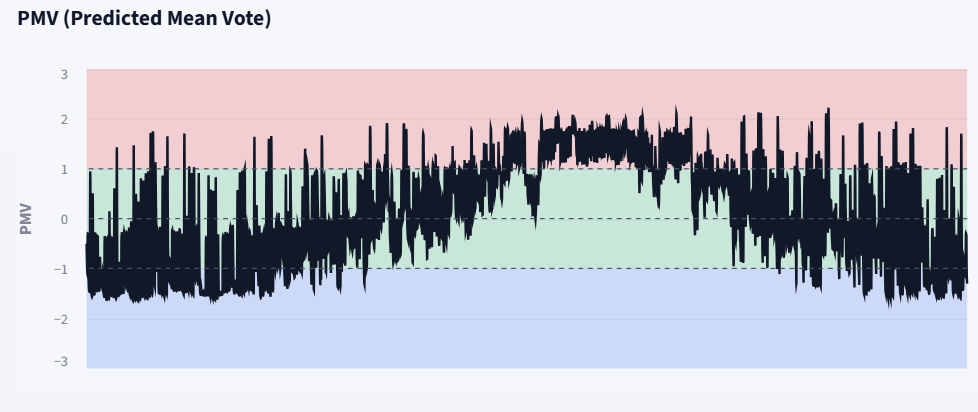
Comfort and overheating outputs make sure lower-carbon options do not hide poor room performance.
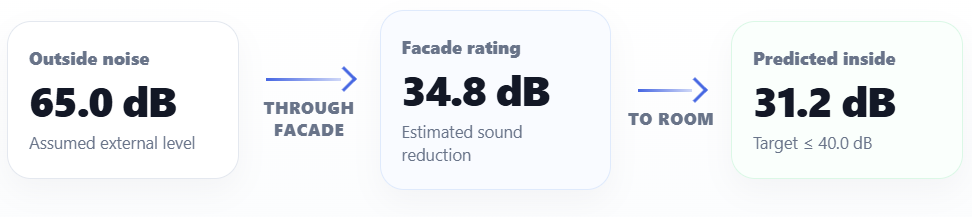
Outside noise, facade sound reduction and predicted room noise are presented as clear review metrics.

Daylight and visual comfort outputs help show how glazing and shading choices affect room experience.
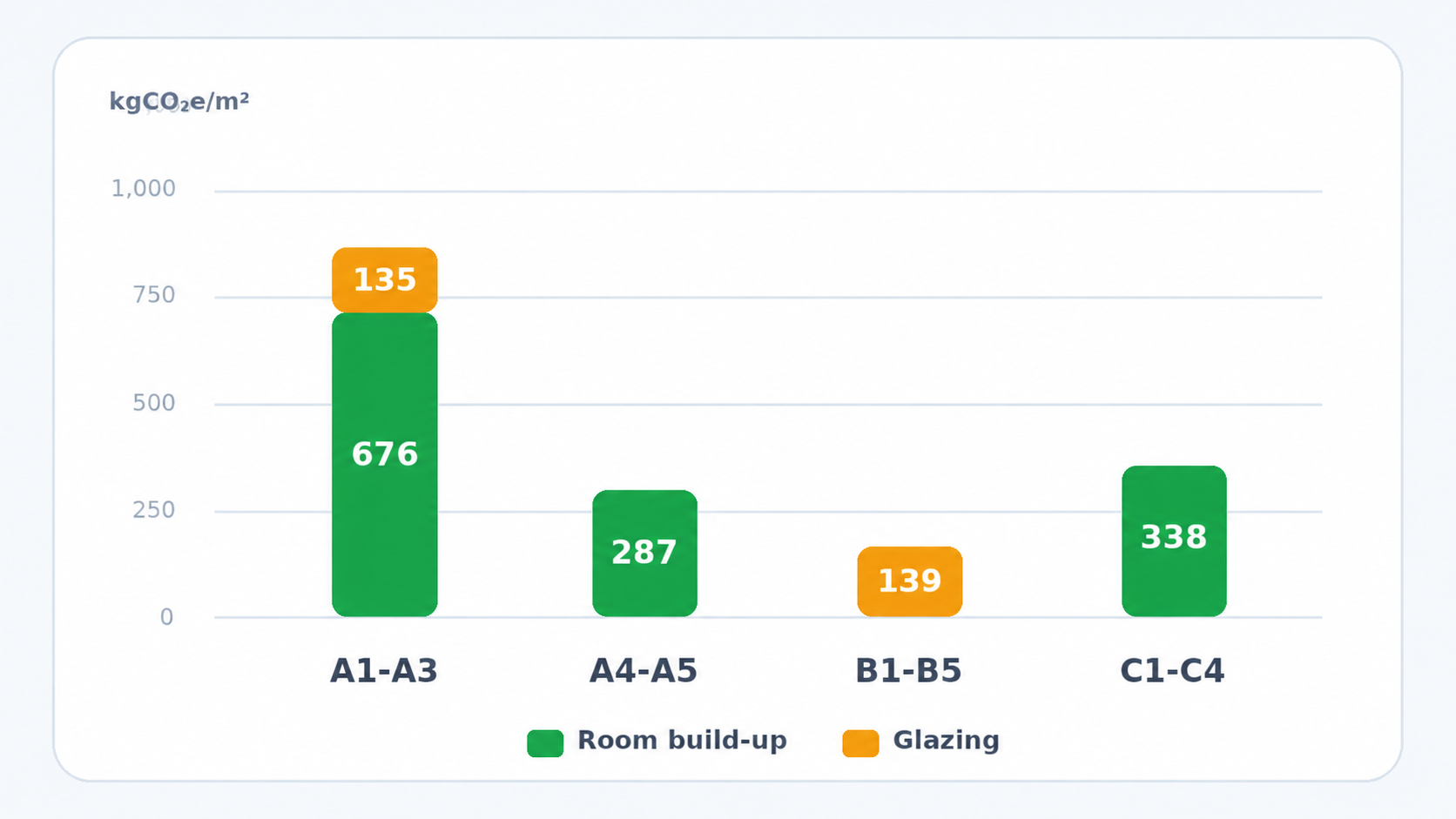
Material and assembly carbon broken down through clear life-cycle modules.
Option-sweep outputs help compare many facade and glazing strategies without reviewing one isolated run at a time.
Radar-style outputs help communicate the balance between carbon, operational and comfort domains.
Discuss early-stage whole-life carbon comparison, facade workflows, research use or teaching access.