Early option appraisal
Compare glazing, facade and assembly options while the design is still flexible.
Use cases
Use CASCA where options need to be compared before facade systems, assemblies and performance assumptions are fully fixed.
Design projects
Use parametric option studies to compare whole-life carbon and occupied comfort across competing facade choices. CASCA helps teams see which options improve one domain while creating trade-offs elsewhere.
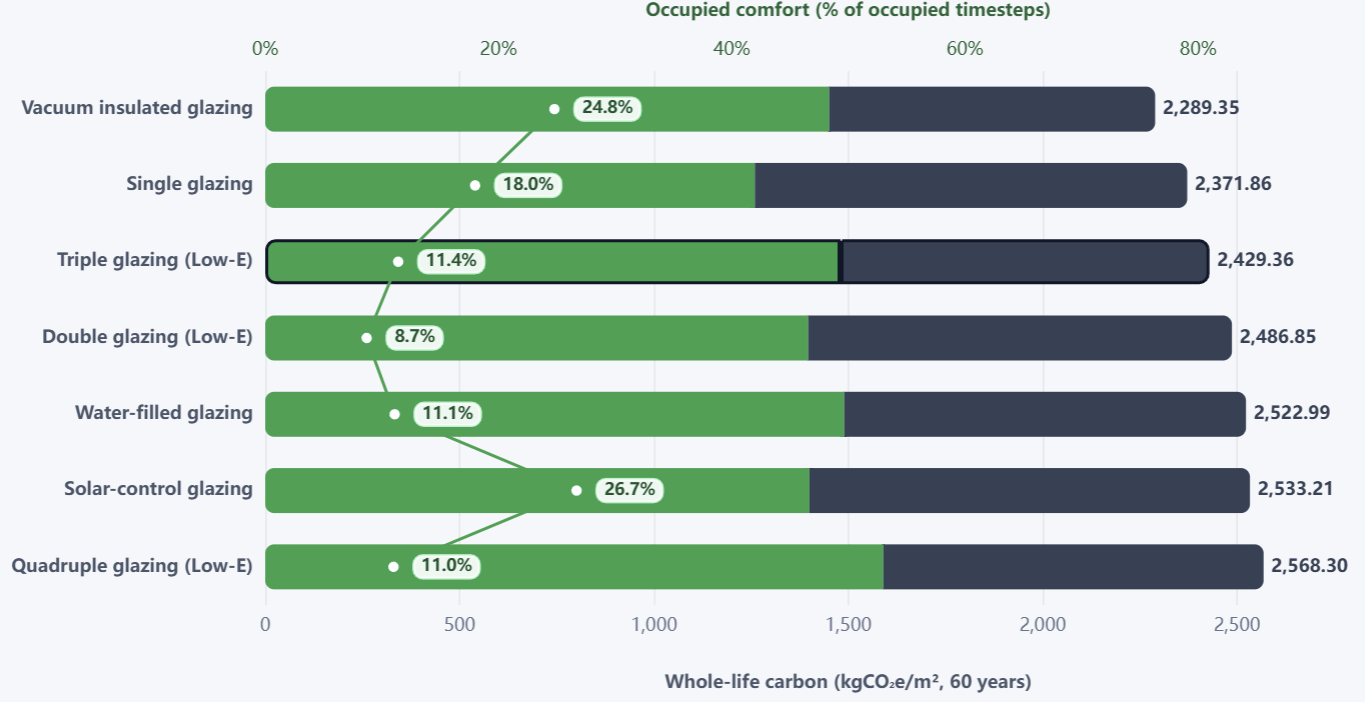
Compare glazing, facade and assembly options while the design is still flexible.
Use clear visual outputs to discuss carbon, energy and comfort trade-offs with non-specialists.
Bring option evidence into review meetings before decisions become difficult to change.
Facade and envelope teams
Use CASCA to test how glazing, build-up, shading and room assumptions affect whole-life carbon, operational energy, thermal comfort, acoustical comfort and visual comfort.
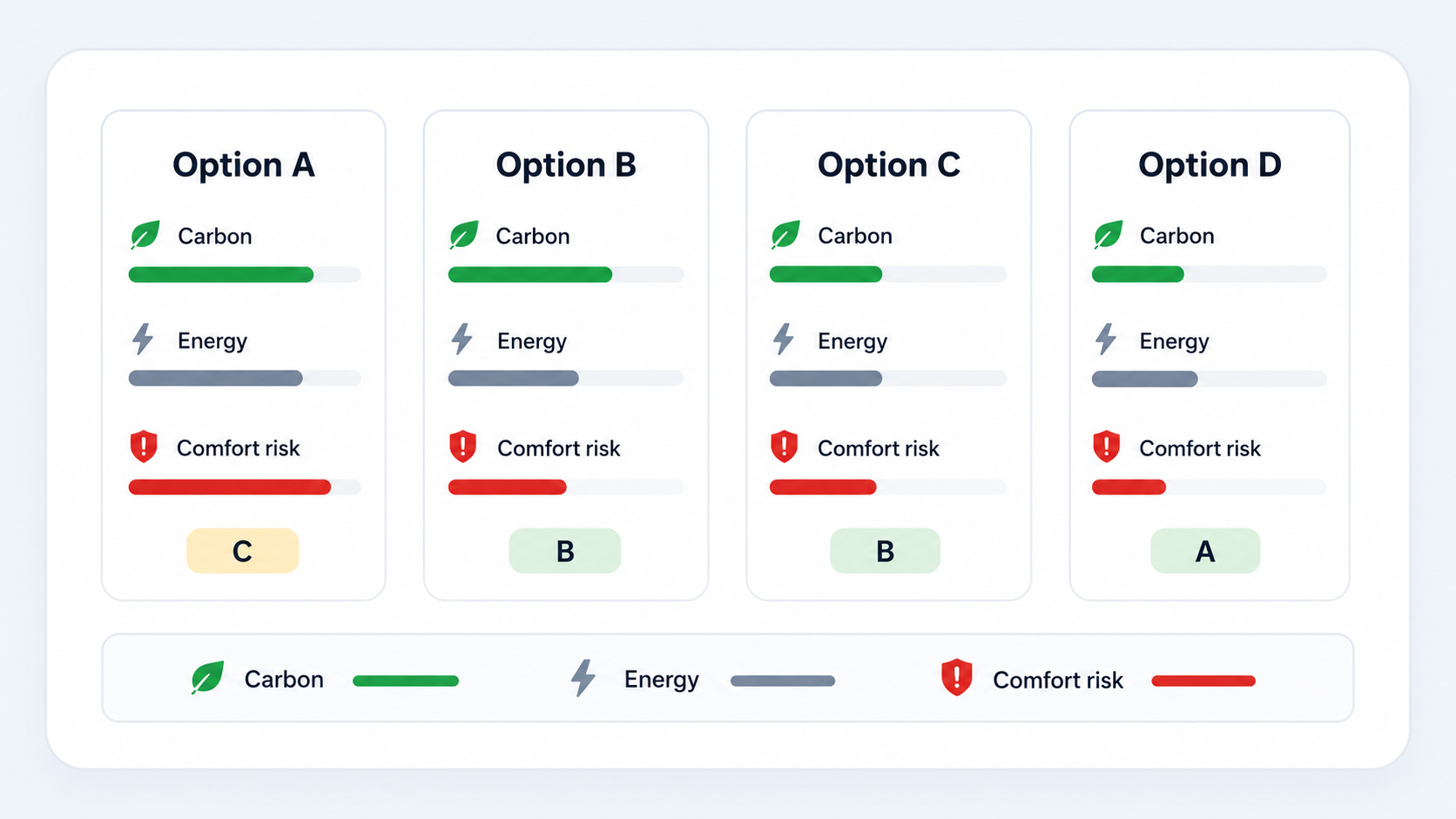
Facade and envelope choices rarely affect only one metric. CASCA keeps performance domains visible together, so a lower-carbon option can be reviewed alongside energy, comfort and acoustic or visual implications.
This supports early-stage facade strategy before detailed modelling, procurement or specification work narrows the design space.
Research
Use CASCA to test controlled changes in glazing, construction, location, weather, gains and comfort criteria. Each scenario is assessed on the same basis, making it easier to compare outcomes and explain performance relationships.
Study how changes in design assumptions affect whole-life carbon, operational energy and comfort outcomes.
Identify which inputs have the strongest influence on performance, such as glazing type, build-up, orientation or occupancy assumptions.
Use consistent outputs to compare calculation approaches, assumptions and benchmark cases.
Teaching
CASCA helps students understand how early design choices affect whole-life carbon, operational energy, thermal comfort, acoustical comfort and visual comfort together.
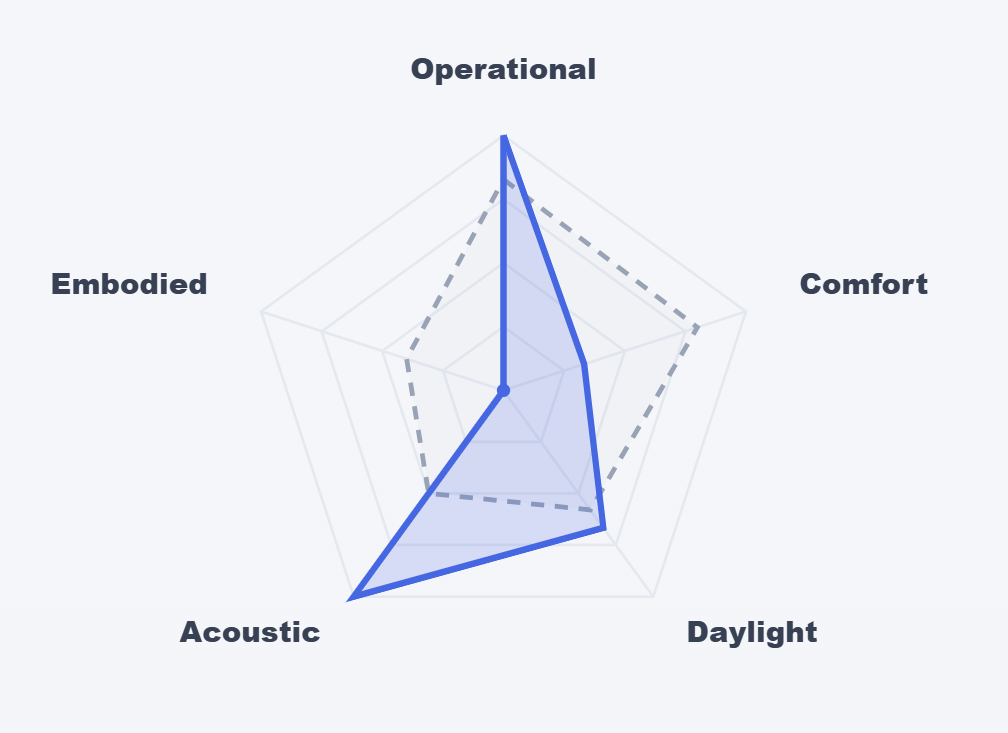
Baseline option: compare the starting design against lower-carbon and comfort-led alternatives.
Example exercise
Students begin with a baseline room, then change one or two assumptions such as window-to-wall ratio, glazing type or shading strategy. They compare how the performance balance changes across the five CASCA domains.
Define location, orientation, room size, construction, glazing and gains.
Test a lower-carbon facade, a comfort-led option or a different glazing strategy.
Use the radar chart and output graphs to justify which option performs best overall.
Compare facade, glazing and material choices during tutorials or design reviews without waiting for specialist modelling.
Use whole-life carbon and operational energy outputs to explain embodied versus operational impacts.
Show how orientation, window-to-wall ratio, glazing and shading affect occupied room conditions.
Ask students to change one assumption and explain how the performance balance shifts.

Discuss early-stage whole-life carbon comparison, facade workflows, research use or teaching access.